
Iontophoresis applications and therapies
Iontophoresis is not only used to treat sweating.
Iontophoresis is used for various applications, most commonly as a therapy for excessive sweating!
Fine electrical currents are indispensable in modern medicine. There are numerous applications based on electrical currents that can achieve positive effects.
In its most common and widely used form, iontophoresis is used to treat hyperhidrosis in many clinics and by many doctors.
In fact, it can be said that all other applications are considered niche, especially for home use or self-administration by patients.
Read more about hyperhidrosis or excessive sweating.
The iontophoresis device for home use, allowing for unsupervised, self-administered therapy, has become established.
Since sweat reduction with iontophoresis is predominantly a long-term treatment, sometimes even lasting decades, having one at home definitely makes sense.
Iontophoresis is rarely used for osteoarthritis, medication delivery, and similar applications; unfortunately, it has fallen somewhat out of favor as a treatment.
Iontophoresis for excessive sweating
The classic application of iontophoresis. Iontophoresis is used to treat excessive sweating. Smaller, sweaty areas are specifically targeted, such as:
But this is just the beginning; there are virtually no limits to the possible and even impossible applications of iontophoresis.
Iontophoresis and Cosmetics
Iontophoresis is also used in cosmetics to deliver active ingredients precisely and deeply into the skin
It utilizes the same technology as medical iontophoresis to generate an electric field on the skin, thereby promoting the absorption of active ingredients.
Cosmetic iontophoresis can be used to enhance the penetration of anti-aging and moisturizing ingredients to improve the appearance and health of the skin. An example of this is the use of vitamin C and hyaluronic acid to improve skin tone and reduce fine lines and wrinkles. As with any cosmetic treatment, it is important to consider the safety and efficacy of iontophoresis. It is recommended to consult a qualified esthetician or dermatologist to ensure that the treatment meets individual skin needs and does not cause any side effects. Iontophoresis sheets: We don't sell iontophoresis sheets, but we've prepared a Google search for you ⇒ CLICK An iontophoresis sheet is a special type of sheet. It conducts electricity. It's designed as an intermediate layer between the electrode and the tissue (sponge bag or towel) and serves as additional protection against contamination. The tissue included in an iontophoresis device set must, of course, be wetted!
Cost of standard iontophoresis sheets: 1000 sheets cost around €60.
The sheets are disposed of after a single use. This is, of course, more environmentally friendly than throwing away the main materials each time. Personalized materials are usually impractical, as they would have to be carried wet from the clinic, practice, or salon to your home.
Iontophoresis and Physiotherapy
Iontophoresis is also used in physiotherapy to treat joint problems
It can help reduce inflammation and pain and promote the regeneration of affected tissue. For example, iontophoresis can be used to treat joint inflammation such as arthritis, bursitis, or tendinitis.
Anti-inflammatory agents such as dexamethasone or salicylic acid are transported through the skin and into the affected tissue to reduce inflammation and pain. When using iontophoresis in physiotherapy, an electrode is connected to the joint being treated, and the medicated solution is applied to the skin.
A weak electrical current is then passed through the electrode to transport the medication through the skin into the tissue. The treatment usually lasts between 10 and 20 minutes and can be adjusted depending on the individual's condition and treatment needs. In orthopedics, iontophoresis can be used to treat a variety of musculoskeletal disorders. Iontophoresis can be an effective and non-invasive treatment option, particularly for chronic inflammation and pain in muscles and joints.
Typical applications in orthopedics include the treatment of tendonitis, such as tennis elbow or Achilles tendinitis, as well as arthritic conditions like osteoarthritis or rheumatoid arthritis. During orthopedic iontophoresis, an electric field is used to deliver anti-inflammatory medications, such as dexamethasone or lidocaine, through the skin and into the affected tissue. The electric field increases the permeability of the skin and underlying tissue to facilitate medication absorption. Treatment typically lasts between 10 and 20 minutes, but this can vary depending on the individual's condition and treatment needs. As with any medical treatment, it is important to consult and be treated by a qualified healthcare professional, such as an orthopedic surgeon or physical therapist, to ensure that iontophoresis is administered safely and effectively, meeting individual needs and requirements. During orthopedic iontophoresis, an electric field is used to deliver anti-inflammatory medications, such as dexamethasone or lidocaine, through the skin and into the affected tissue.
Drug delivery iontophoresis "Drug iontophoresis with medication"
DDI is a term from the field of medical therapy. It refers to a non-invasive method for administering medication through and via the skin using an electric current
Drug delivery iontophoresis is rather uncommon—if you encounter it at all—and is used in physiotherapy and sports medicine to treat inflammation, pain, and muscle spasms. Which osteopath, orthopedist, or sports medicine specialist even still has their own iontophoresis device?
Feel free to ask. Internet search results often make it seem as if drug iontophoresis is commonplace and that such a device is available everywhere. Unfortunately, this is not the case. I would estimate: 95% of iontophoresis is used for hyperhidrosis (excessive sweating). 3% is used in sports medicine, orthopedics, and physiotherapy. 2% is used for cosmetics. That's it, my friends, so no "Ah, iontophoresis for this and that."
The truth is: iontophoresis is used commonly "almost only" for treating excessive sweating and a few other, more unusual applications.
The most common treatment is still iontophoresis for excessive sweating
But back to medication and iontophoresis.
During iontophoresis, a small electric current is applied to the skin using an applicator to create an electric field. This field helps transport charged medication molecules, such as ions or ionized molecules, through the skin and into the underlying tissue. The medication can then act specifically on the affected area and provide symptom relief. Ointments, solutions, and tinctures are administered using iontophoresis. Some medications are polarized, which indicates which pole they are applied to. Negative-polarized medications belong under the positive electrode; they migrate from the negative electrode to the positive electrode. Positive-polarized medications belong under the positive electrode; they migrate from the negative electrode to the positive electrode. Non-polarized or unpolarized medications can be placed under either electrode. If unsure, you can simply place a small amount of the active ingredient under each electrode. Ideally, the electrode and counter electrode should be attached to the body parts to be treated in such a way that the medication can reach its target in the center. Depending on the body part, a current of less than 5 mA is used – caution: skin burns are possible! Do not exceed 0.1 mA per cm²! Treatment duration depends on the depth; for example, knees require approximately 5 minutes, and wrists approximately 2.5 minutes. This means: get out your ruler and calculator, measure first, then determine the maximum dose, attach the electrodes correctly, and thoroughly moisten the pads – it's better to let them soak for 2 minutes than 2 seconds. Normally, this isn't a problem because the currents rarely exceed 5 mA. However, for small areas, it's best to check beforehand – or you'll be in trouble later. Silicone electrodes are often used in drug iontophoresis because they are easier to attach or position on large areas of the body, especially with pronounced curves or large electrode or application surfaces. This can be misleading, though, because even a flexible electrode can quickly become stuck to only a small area of skin if it wasn't properly positioned or secured.
A proven method is to moisten an elbow pad in the appropriate places and then attach the electrode in the moistened sponge pocket over the pad. The water then conducts the current precisely where it's needed.
Hopefully, the pad will then make complete contact with all moistened areas, and the water will provide a perfect conduction path for the current, which it will then follow according to the law of partial resistance.
In this case, the electrode material doesn't necessarily have to be flexible; in our opinion, a metal electrode is preferable.
The BfArM (Bundesinstitut für Arzneimittel und Medizinprodukte means: The german Federal Institute for Drugs and Medical Devices) explicitly considers silicone electrodes in iontophoresis to be a potential source of problems -> see the article on page 2, middle paragraph at the bottom. For your information: BfArM The Federal Institute for Drugs and Medical Devices of Germany is the largest drug regulatory authority in Europe. Criticism of this view: Electrodes, whether silicone or metal, can both conceivably lead to such problems, even though only silicone was explicitly mentioned. It is certainly possible that if a silicone electrode loses its conductivity (and with prolonged use, they simply lose conductivity; some manufacturers only offer a six-month warranty, which speaks volumes), a so-called hotspot develops. This hotspot, especially in combination with insufficiently moistened towels, sponge cloths, or sponge pouches, can then transmit radiation to the skin in a concentrated, localized manner. What happens next is easy to imagine. In our opinion, such a scenario would only be conceivable with metal if the metal is completely scratched and/or covered with patina, and one area is still bare because it was only partially polished. Of course, one could also overdo it or provoke the process. Or, the materials that make direct contact with the electrodes, regardless of the material, could be incorrectly placed or only partially moistened. Conclusion: Iontophoresis can be a safe and effective alternative to oral or injected medications, as it can minimize side effects and reduce the need for frequent and prolonged doses. However, it is important to consult a doctor before starting a new treatment.
Threshold Iontophoresis
There is an overlap between the term and the threshold for iontophoresis in cases of excessive sweating
For a successful sweat therapy, a certain current level or intensity must be reached for the iontophoresis to be effective, and a certain dose (time / frequency / current) is necessary to get over the iontophoresis treshhold.
Both together determine the potential success. Therefore, it is the minimum current required to achieve an effect, quite unlike the threshold of iontophoresis.
Threshold iontophoresis describes the maximum current that can be used without risking side effects.
Threshold iontophoresis is a form of therapy used in physical therapy to alleviate pain and inflammation.
It utilizes the effect of iontophoresis, in which active ingredients are introduced into the skin by an electrical voltage. The threshold refers to the minimum current intensity at which the desired effect is achieved without causing side effects. This limit varies from patient to patient and depends on factors such as skin type, body weight, and individual sensitivity.
Threshold iontophoresis is particularly effective in treating pain and inflammation in the joints, muscles, and tendons. In this procedure, anti-inflammatory and pain-relieving agents such as dexamethasone or lidocaine are delivered into the skin via electrodes. The therapy is generally painless and performed on an outpatient basis. A session lasts approximately 30 minutes and should be repeated several times a week to achieve a long-term effect. In some cases, skin irritation or allergic reactions may occur; however, these are rare and can usually be avoided by adjusting the current intensity. Threshold iontophoresis is a promising form of therapy, particularly for chronic pain and inflammation. It offers an alternative treatment method to pain medication and has only minor side effects. The individual adjustment of the current intensity allows for targeted and effective treatment tailored to the needs of each patient.
Overall, threshold iontophoresis is an important addition to conventional therapy for pain and inflammation in the joints, muscles, and tendons.
Due to its targeted effect and minimal side effects, it offers a promising option for rapid and long-term relief from discomfort.
Stanger bath - Iontophoresis in large
Stanger Bath
Rare, because of the correspondingly large iontophoresis devices, but still occasionally encountered: the Stanger bath.
These are available as sitz baths, partial, half-body, and full-body baths.
In the classic full-body bath, it resembles a bathtub in which one can sit or lie. The current then flows, so to speak, holistically distributed over all wet areas of the body.
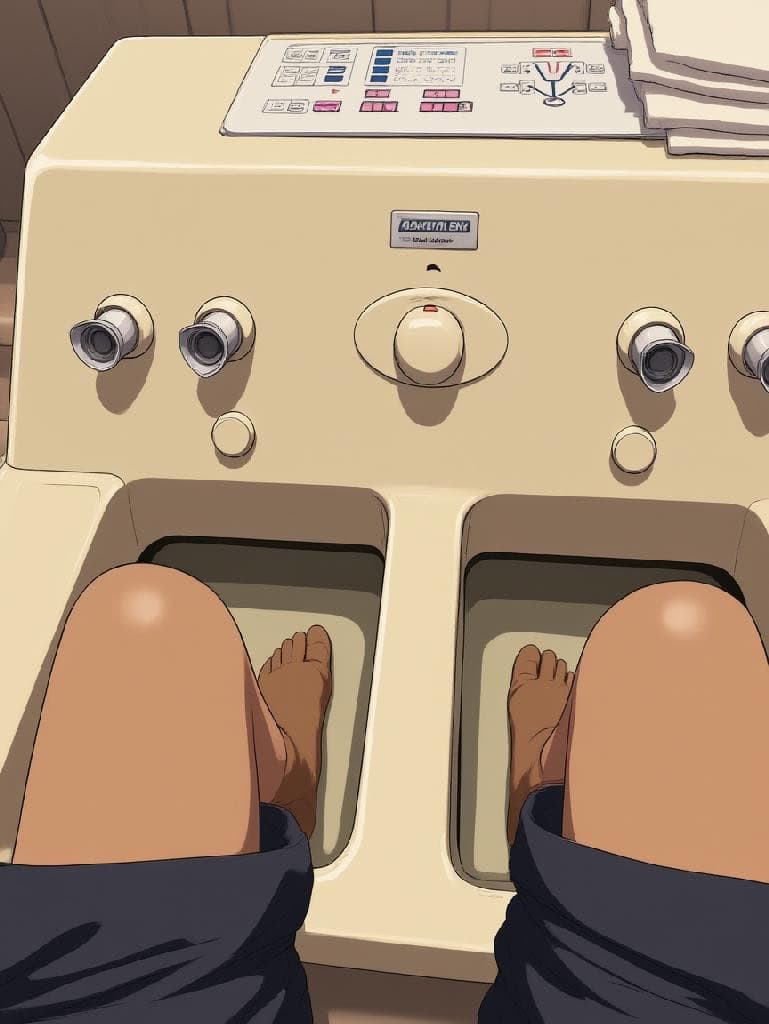
In a sitz bath, there are deep basins for the feet, at the bottom of which the electrodes are located, and usually the same for the arms on both sides. This allows one to treat arms or legs, or both at once, while deeply immersed.
In principle, this form of iontophoresis could also be performed at home with a home iontophoresis device and wet knee-high socks or wet fabric sleeves with gloves.
Sitz baths consist of deep basins for the feet, with the electrodes located at the bottom, and usually the same for the arms on both sides. The maximum currents delivered by our iontophoresis devices, which you can purchase in our online shop, are quite comparable in strength. However, these currents are generally on the lower end for a Stanger bath, so you don't need to turn the devices up so high that you feel a tingling sensation. In principle, though, the doctor always determines the dosage for these applications. In this case, dosage means current multiplied by time and frequency per week.
Depending on the number of iontophoresis electrodes used on the extremities being treated, it's a two-cell or four-cell bath.
This describes the number of tubs and electrodes used during an iontophoresis session.
Stanger baths are found in larger rehabilitation centers and university hospitals. Not every facility offers this type of whole-body electrotherapy bath.
The Stanger bath has proven its worth in various ways in clinics and is frequently used in cancer aftercare, for rheumatic diseases, and for patients with paresis.
Dyshidrotic eczema
Dyshidrosis is most commonly found on the sides of fingers or toes!
Dyshidrotic eczema is a hand and foot eczema characterized by small, intensely itchy blisters.
These blisters then develop a callus-like layer, making dyshidrotic eczema even more uncomfortable.
It is often associated with a malfunction of the sweat glands. Iontophoresis can be helpful in this case, as this is also common in people who sweat excessively.
Ideally, the blisters subside quite quickly with iontophoresis.
Dyshidrotic eczema is more common in summer, especially when handling hot surfaces, such as the steering wheel, which can trigger or worsen the condition.
Treatment-resistant warts: On the hands or soles of the feet
These treatments exploit the fact that a wart represents a weakness in the skin. Here, the skin resistance is quite low, and the current flows primarily through this area. Warts are often sensitive to this.
If you deliberately overdo it, you can essentially burn the wart out with the current. However, this should only be done under medical supervision or with a doctor!